How to Build a Weekly Wellness Routine That Survives Real Life
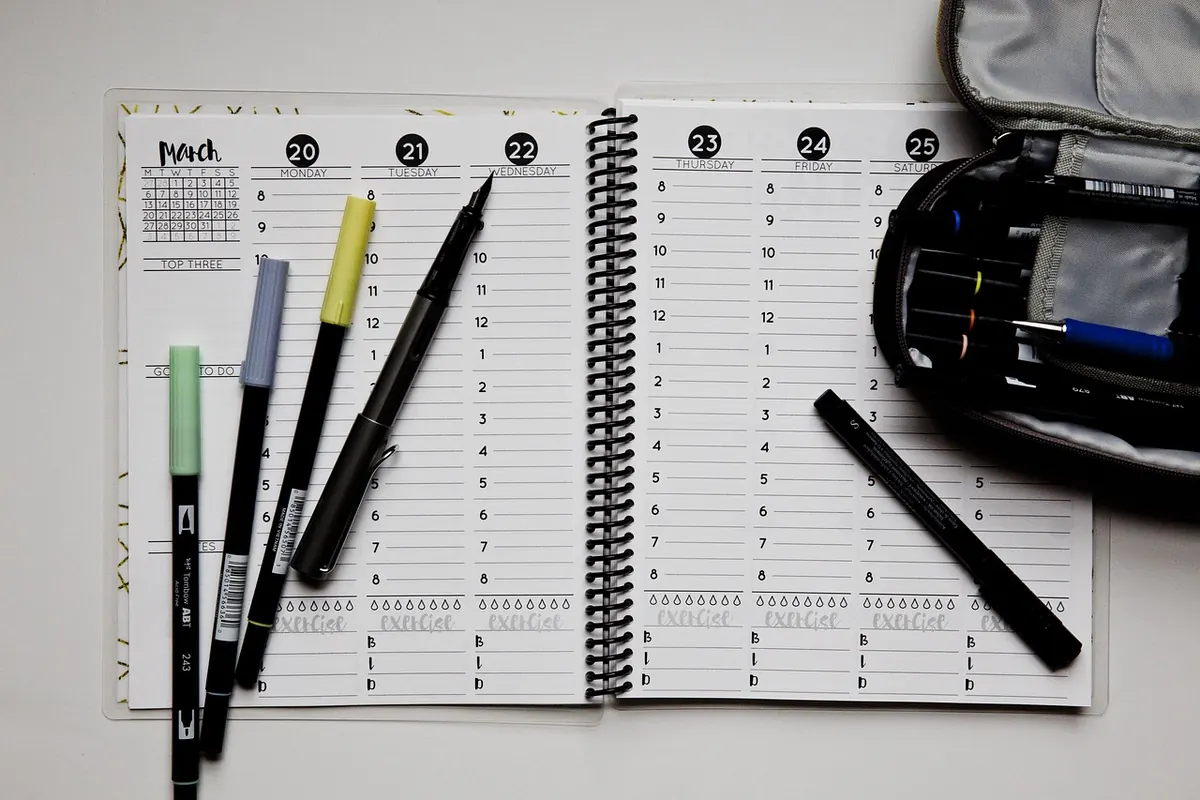
Most wellness routines don't collapse dramatically. They fade out on an ordinary Tuesday, when a meeting runs long, dinner happens late, and the twenty minutes of stretching you planned turns into scrolling on the sofa. Nothing went particularly wrong. The plan simply assumed a week that never showed up.
A routine that lasts isn't stricter than the rest of your life. It's more forgiving. It's built around the hours you actually control, uses habits small enough to survive a bad day, and has an answer ready for the weeks when everything slips. Here's how to put one together.
Start With Your Actual Week, Not Your Ideal One
Before you choose a single habit, look at the week you're really living. Open your calendar and your messages and mark the fixed points: the school run, the late shift on Thursday, the evening you always spend driving someone somewhere, the morning you never sleep well.
Then ask one question: which hours in my week are reliably mine? Not theoretically mine. Actually mine, in the sense that nothing else habitually lands there.
For most people this is a smaller set than they expect — maybe two early mornings, a Saturday late afternoon, and the twenty minutes after the house goes quiet. That's fine. A routine built on four real hours beats one built on fourteen imaginary ones. If you design around the hours you wish you had, you'll be redesigning again in three weeks.
Choose Fewer Habits Than Feels Ambitious
Two or three habits is usually the right number to start with. Not seven. Seven is a list you'll feel guilty about by the second week. Two is something you can hold in your head without an app reminding you.
When you're picking them, run each one through a short filter:
- Can you do a version of it on your worst day? If a habit only works when you're rested, unhurried and alone, it isn't a habit yet. It's an occasional treat.
- Does it need someone else to cooperate? A gym class depends on a booking, a commute and a clean kit. A walk depends on shoes.
- Can you tell whether you did it? "Eat better" is a mood. "Add a vegetable to dinner" is a decision you can check off.
- Do you actually care? Not "should" care. Care. Habits you're mildly ashamed of not having rarely last; habits tied to something you want — steadier energy, fewer headaches, a clearer head in the morning — usually do.
Good starting candidates tend to be unglamorous: a ten-minute walk after lunch, a glass of water before coffee, lights out half an hour earlier on two weeknights, protein at breakfast, a proper lunch away from the desk. Boring habits survive. Impressive ones get abandoned.
Give the Week a Skeleton, Not a Cage
A daily checklist is brittle: miss one day and the whole thing feels broken. A weekly skeleton is sturdier, because each habit has more than one place to land.
Instead of "I stretch every morning," try "I stretch on three mornings this week." Instead of "I cook every night," plan two cooking sessions and accept that the rest is leftovers, something quick, or whatever the day brings. The week becomes a container with slots, and filling the slots is the goal — not perfect attendance.
The two-thirds rule
A reasonable standard: if you hit roughly two-thirds of your planned slots, the week counts as a success. Three walks out of four, two cooking sessions out of three, four early nights out of six. This leaves room for the ordinary chaos of being a person without turning every missed slot into evidence that you've failed.
Anchor Each Habit to Something That Already Happens
New habits struggle when they have to be remembered. They thrive when they're attached to something automatic — a moment in the day that already happens without negotiation.
Some anchors that work well:
- After you fill the kettle in the morning, drink a glass of water while it boils.
- When you sit down for a call, put a resistance band on the desk and use it once the camera is off.
- When you take your shoes off at the door, change straight into walking shoes for a short loop.
- After you clear the dinner plates, put tomorrow's lunch container on the counter.
- When your phone goes on charge for the night, the stretching mat comes out.
The physical cue matters more than the mental one. Water bottle by the kettle, shoes by the door, mat in the corner where you can see it. You're arranging your environment so the easy choice is also the intended one.
Write the Messy-Week Plan Before It Arrives
Every routine meets a week that breaks it. Illness, a deadline, a visiting relative, a stretch of bad sleep. The difference between people who keep going and people who quit isn't resilience; it's having decided in advance what the fallback looks like.
For each habit, write a "floor version" — the smallest version you'd still recognise as keeping the habit alive:
- Full version: forty-five minute walk. Floor version: one lap around the block.
- Full version: meal prep on Sunday. Floor version: buy frozen vegetables and a rotisserie chicken.
- Full version: strength session at the gym. Floor version: ten squats and ten press-ups before the shower.
- Full version: proper wind-down and lights out by eleven. Floor version: phone across the room and lights out by midnight.
The floor version exists so you don't have to choose between doing it perfectly and doing nothing. Keep the thread, even when the thread is thin.
Track Two Things, Not Twelve
Tracking works when it's small enough to be honest. Pick one behaviour and one feeling. For example: whether you walked, and how your energy was at three in the afternoon. A note on the fridge or a notebook by the bed is enough.
After three or four weeks, read back through it. You're not looking for a score; you're looking for patterns. Which day of the week does the routine fall apart? Is it the evening you're out, or the morning after? Do the walks happen more often when you lay your clothes out the night before? That's the information worth acting on, and it's the kind of thing no generic plan can tell you.
The Ten-Minute Weekly Reset
Once a week, ideally at the same time each week, sit down for ten minutes with a cup of something and answer three questions.
What worked? Name one habit that felt almost effortless. That's a keeper, and it's a candidate to build on later.
What got in the way? Be specific. "No time" is not an answer; "Thursday's late shift means no evening walk" is. Specific obstacles have specific fixes — move the walk to the morning, or make Thursday the floor-version day.
What's the one adjustment for next week? One. Not five. Maybe you move a session from Wednesday to Tuesday, or finally put the shoes by the door.
Then close the notebook and get on with your day. The point of a routine isn't to be impressive on paper. It's to give you a handful of steady habits that keep showing up in the background, week after week, even when the week itself is a mess.
A note on health: this is general guidance, not medical advice. If you have a health condition, an injury, or you're making significant changes to exercise, diet or sleep, talk to a doctor or another qualified professional who knows your situation.
Photo: rayedigitaldesigns / Pixabay